New York Metro · Upper East Side, New York
Smart Home, Lighting & AV on the Upper East Side.
A prewar co-op on Park Avenue, a limestone townhouse off Fifth, a condo on the river. The Upper East Side is mostly landmarked and mostly run by boards, and the technology has to fit inside both.
Upper East Side, Specifically
Landmarked Outside, Prewar Inside.
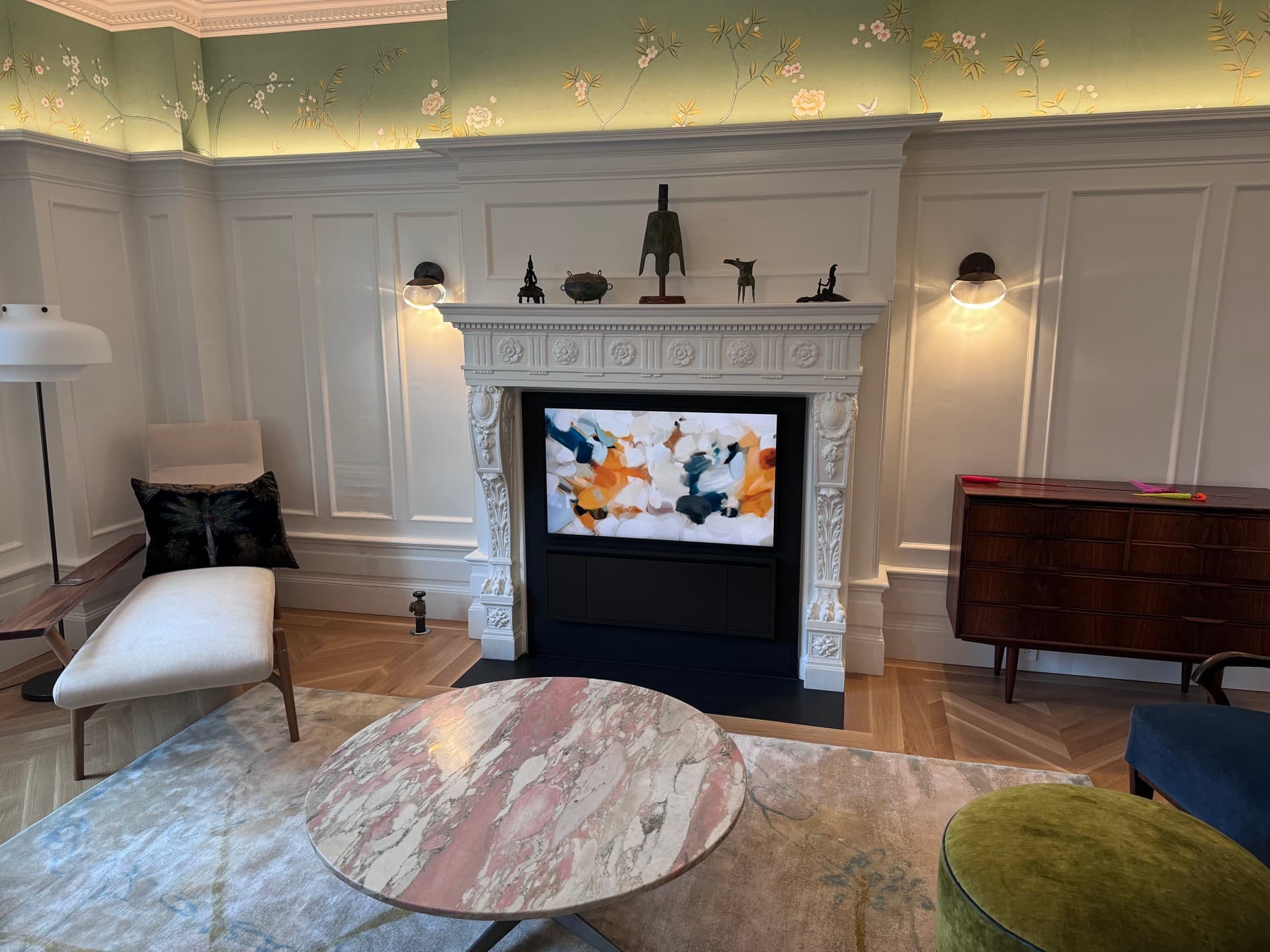
Most of the Upper East Side between Fifth and Lexington sits in a Landmarks historic district: the Upper East Side district from East 61st Street, the Park Avenue district that joined it to Carnegie Hill in 2014, and Carnegie Hill to the north. The facade, the windows, and anything mounted outside belong to the Commission's review.
Inside, the co-op board decides. Its alteration agreement names the trades, the insurance, and the hours, and its architect reviews the drawings. A townhouse has no board but has its own problem: five floors, one stair, and plaster on every wall. We design for the building first and the equipment second.
01 · The Board
A Package the Building Can Approve
Park and Fifth Avenue co-op boards expect drawings, licensed trades, certificates of insurance, and work inside fixed weekday hours. We produce the technology drawings and documents in that package and keep to the schedule it sets.
02 · Townhouses
Five Floors and One Riser
A townhouse needs a network and a control system that reach the cellar, the garden, and the top floor without opening every wall. We find one vertical path, a closet stack or a dumbwaiter shaft, and run Lutron wireless keypads and Ketra lamps where the plaster stays.
03 · Landmarks
Nothing on the Facade Without a Permit
In a historic district, a camera, an intercom panel, or a through-wall vent on the front of the building needs a Landmarks permit. We keep the system inside the envelope and give your architect what the filing needs when something must show.
At a Glance
Upper East Side in brief.
- Historic districts
- The Upper East Side Historic District was designated on May 19, 1981 and extended in 2010 with 74 buildings along Lexington Avenue; the Park Avenue Historic District, designated on April 29, 2014, links it to the Carnegie Hill Historic District, expanded in 1993.
- Landmarks permits
- A Landmarks permit is required for work that affects the exterior of a building in a historic district, and for interior work that needs a Department of Buildings permit.
- Alteration agreements
- Co-op boards commonly require an architect's plans before work begins, NYC-licensed electrical, plumbing, and HVAC trades, and contractor hours such as 9 AM to 5 PM on weekdays, with seasonal limits on noisy work in some buildings.
- Prewar construction
- Prewar apartments typically have plaster-and-lath walls, steel beams, and poured-concrete subfloors; older buildings often still carry 60- to 80-amp service, so a panel upgrade can come before new lighting-control loads.
- Internet
- Verizon Fios fiber and Spectrum are the two wired providers in most of Manhattan, and availability varies building by building, so we confirm service at the address before designing the network.
Sources: NYC Landmarks Preservation Commission, Upper East Side Historic District designation (LP-1051); Upper East Side Historic District (Wikipedia); NYC Landmarks Preservation Commission, Park Avenue Historic District designation (LP-2547); DNAinfo, Upper Park Avenue designated a historic district; NYC Landmarks Preservation Commission, permit types; SRNY, the NYC alteration agreement process; Gallery KBNY, prewar remodeling; Allconnect, internet providers in Manhattan.
Reading for Upper East Side
Guides and work nearby.
- Technology for a Park Avenue penthouse →
- The board approval paperwork, explained →
What the alteration agreement asks for, and who produces each piece.
- Automation in a prewar apartment →
- Motorized shades and the board's rules →
- Ketra tunable lighting, explained →
- What home automation costs in New York →
What We Install and Service
Every System. One Keypad.
Lighting & Shades
Lutron HomeWorks, Ketra and Rania light, Palladiom keypads, and shades that disappear into the ceiling.
Lighting →Whole-Home Control
Crestron and Lutron on one set of keypads and touchscreens, programmed the same way in every house you own.
Residential →Cinema & Music
Dedicated theaters, media rooms, and music in every room without a speaker in sight.
Residential →Network
Enterprise Wi-Fi and fiber sized for a large house, guest houses, and the far end of the lawn.
Networking →Security & Gate
Cameras, access control, gate intercom, and an alarm that a UL-listed central station answers.
Security →Outdoors
Landscape lighting and outdoor sound on one buried infrastructure, on the same keypad as the house.
Outdoor →Upgrades
Older Crestron and Lutron systems brought current, reusing the wiring already in the walls wherever possible.
Upgrade paths →Support
Monitoring, remote fixes, and priority response under one plan.
Cave Watch →Questions From Upper East Side
Upper East Side, Answered
Who installs Lutron and Crestron systems on the Upper East Side?+–
Cave Group does. We are a Crestron Elite Gold Partner and Lutron Gold Dealer with an office in Long Island City, and we design, install, and service lighting control, shades, cinema, audio, networking, and security for co-ops, condos, and townhouses from Lenox Hill to Carnegie Hill.
Will our co-op board approve lighting control and motorized shades?+–
Yes, and the paperwork comes first. The building's alteration agreement names the licensed trades, the insurance that must cover the building, and the hours in which work may happen. We produce the technology drawings and the contractor documents the board's architect reviews, and we schedule inside the hours the building allows. Wireless Lutron keypads live in the existing boxes and the processor sits in a closet, so the scope the board reviews is small.
Our townhouse is in a historic district. What does Landmarks review?+–
The Landmarks Preservation Commission reviews work that affects the exterior, and interior work that needs a Department of Buildings permit. Cameras, intercom panels, exterior lighting, and vents on the facade need a permit; most of what we do inside does not. We keep equipment inside the envelope and prepare what your architect needs when something must show.
Can a prewar apartment get a smart home without opening the walls?+–
Usually, yes. Lutron's wireless dimmers and keypads replace the existing switches, Ketra lamps fit the existing fixtures, and motorized shades run on battery or one low-voltage drop. We check the electrical service first, because prewar buildings often carry 60- to 80-amp service that a renovation may need to upgrade.
Do you take over and support systems another company installed?+–
Yes. We assess and document what is there, recover or rebuild the programming, replace what has reached end of life, and bring the system under a Cave Watch support plan, so the next problem has a phone number.
Nearby
Other New York areas we serve.
Start Here
Walk the Home With Us.
Bring the drawings if it is on paper, or the list of what no longer works if it is built. We will tell you what we would do, in what order, what it would take, and what the board will want to see.
Start a Projector call · +1 (888) 712-2283 · [email protected]