Manhattan
Co-ops, condos, and the board package
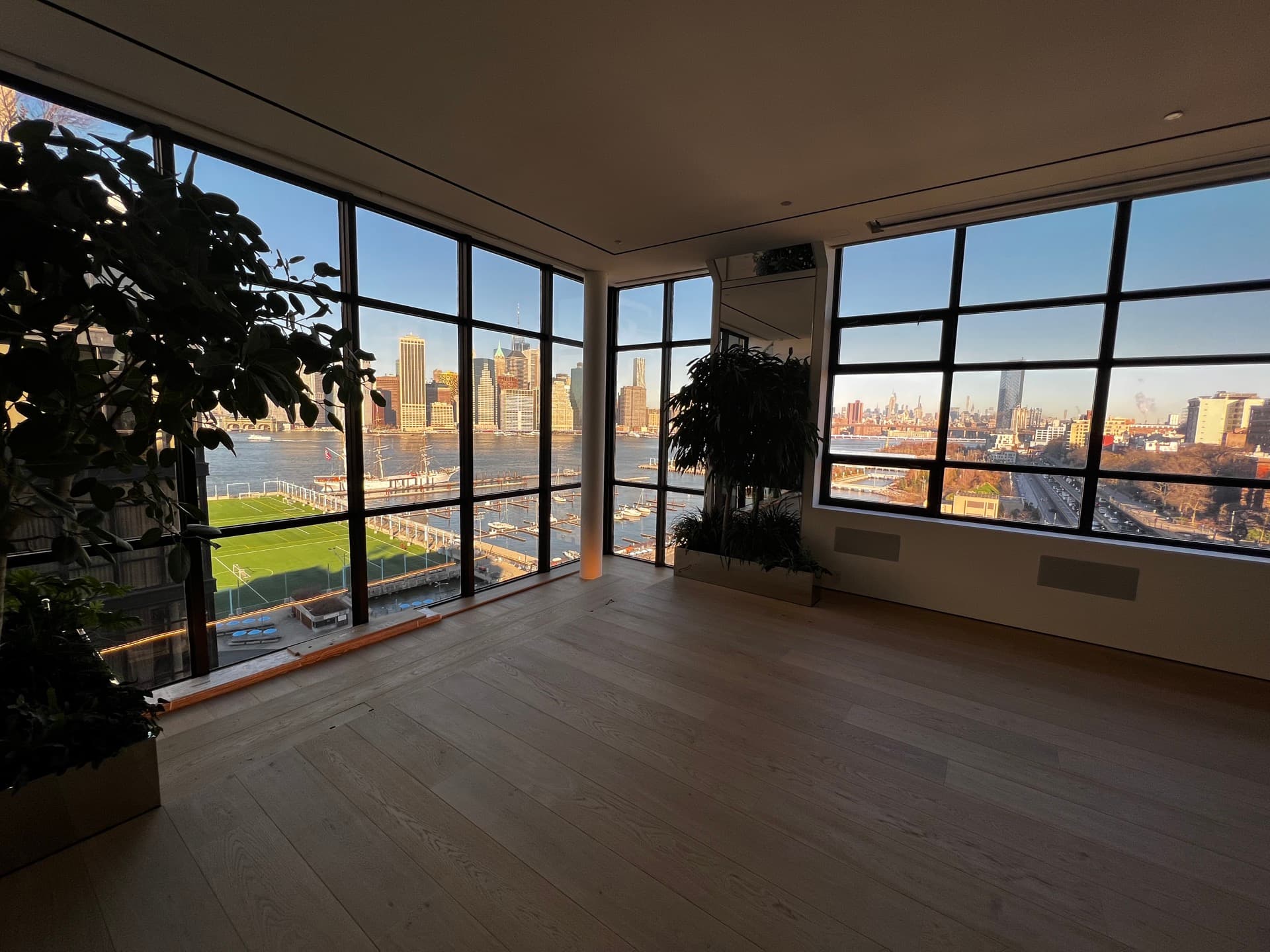
Prewar co-ops on Park and Fifth, lofts downtown, new towers on the river. Every one has a board, an alteration agreement, and a set of hours. We design around the building's rules, not against them.
New York Metro
Lighting, shades, cinema, music, network, and security for Manhattan apartments, Brooklyn townhouses, Westchester and Greenwich estates, and Hamptons houses — designed, installed, and serviced by one team with an office in Long Island City.
How We Work Here
A New York project answers to more people than most: a board, a building architect, a managing agent, a Landmarks reviewer, and the contractor’s schedule. We carry the technology through all of it, and we are still there after the last trade leaves.
01 · In the City
Co-op and condo boards approve the drawings, the insurance, and the hours before anyone touches a wall. We prepare what the building's architect and managing agent ask for, so the alteration agreement is signed on schedule.
02 · Older Buildings
Prewar apartments and brownstones were not built for cable. We plan the runs, the panel capacity, and the shade pockets around what the building allows, and use wireless Lutron where the walls should stay closed.
03 · Outside the City
Westchester, Greenwich, and Hamptons properties spread across more than one building and more than one season. Fiber between buildings, a generator-backed rack, and remote monitoring for the months nobody is home.
04 · After Move-In
Cave Watch monitors the network and control system around the clock and fixes most faults remotely, often before you notice them.
Where We Work
A Tribeca loft, a Park Slope brownstone, a Scarsdale colonial, and a Sagaponack house are four different problems. Building rules, the age of the structure, and how often the owner is there change what we design. Seven areas have their own page.
New York City
Manhattan, Brooklyn, and Queens: co-ops and condos with boards and alteration agreements, brownstones with party walls, lofts in landmark districts, and detached houses in planned enclaves. Our New York office is in Long Island City.
Co-ops, condos, and the board package
Prewar co-ops on Park and Fifth, lofts downtown, new towers on the river. Every one has a board, an alteration agreement, and a set of hours. We design around the building's rules, not against them.
Cast-iron lofts in four historic districts
Former warehouses turned into lofts with tall windows and a Landmarks district on almost every block. Our 2024 Tribeca penthouse, with Lutron HomeWorks QSX, Ketra, Crestron, and a Kaleidescape theater, is the kind of project the neighborhood produces.
Brownstones, party walls, and DUMBO lofts
Row houses that share walls on both sides, landmark districts from Brooklyn Heights to Park Slope, and converted warehouses on the waterfront. A Brooklyn townhouse is five floors of vertical cable planning.
Detached houses in planned, private enclaves
Douglaston, Malba, Jamaica Estates, and Forest Hills Gardens: detached houses with driveways and gardens, several inside landmark districts or private associations with their own architectural review. Our New York office is in Long Island City, in the same borough.
North of the City
Westchester and Fairfield County: two- and four-acre zoning, more than one building per property, village boards that review the facade, and a generator permit in every town.
Estates from Scarsdale to Bedford
Scarsdale and Bronxville on the train line, Rye on the Sound, and the four-acre country of Bedford and Armonk. Westchester houses come with more than one building, a generator permit, and a village that reviews the facade.
Backcountry acreage and the waterfront
Four-acre zoning in the backcountry, waterfront on the Sound, and Darien, New Canaan, and Westport along the shore. Connecticut licenses low-voltage work, and Greenwich permits every generator.
The East End
The Hamptons: second homes used for a season, oceanfront lots in wave-action flood zones, one wired internet provider, and a system that has to run itself from October to May.
Second homes, salt air, and one wired provider
Southampton to Montauk: houses used for a season, left for the winter, and exposed to the weather in between. Our 2024 Southampton waterfront project set the pattern: HomeWorks QSX, Crestron, Wi-Fi 7 to the marina, and audio inside and out.
What These Homes Ask For
Lutron HomeWorks, Ketra and Rania light, Palladiom keypads, and shades that disappear into the ceiling.
Lighting →Crestron and Lutron on one set of keypads and touchscreens, programmed the same way in every house you own.
Residential →Dedicated theaters, media rooms, and music in every room without a speaker in sight.
Residential →Enterprise Wi-Fi and fiber sized for a large house, guest houses, and the far end of the lawn.
Networking →Cameras, access control, gate intercom, and an alarm that a UL-listed central station answers.
Security →Landscape lighting and outdoor sound on one buried infrastructure, on the same keypad as the house.
Outdoor →Older Crestron and Lutron systems brought current, reusing the wiring already in the walls wherever possible.
Upgrade paths →Monitoring, remote fixes, and priority response under one plan.
Cave Watch →Our Work in New York
Tribeca · 2024
Lutron HomeWorks QSX with Ketra tunable white, Crestron 4-Series control, a custom home theater with Kaleidescape, and a UniFi Enterprise network.
Read the project →Southampton · 2024
Lutron HomeWorks QSX, Crestron 4-Series, UniFi Wi-Fi 7 that reaches the marina, and distributed audio indoors and out with Coastal Source.
Read the project →Lower Manhattan · Ongoing
Lighting control, Crestron 4-Series whole-property automation, audio distribution, and PMS integration for the private club and hotel at the Battery Maritime Building.
Read the project →For Architects, Builders, and Designers
How we coordinate with architects, builders, and designers.
What a co-op or condo board asks for, and who produces it.
What has to be decided before ceilings close.
What to lock before drywall.
A sheet-by-sheet checklist for lighting control, AV, and network.
Keypad, shade, and fixture decisions in the right order.
The technology trade on the same dated gates as the electrician.
Further Reading
Questions We Hear
Cave Group does. We are a Crestron Elite Gold Partner and a Lutron Gold Dealer with an office in Long Island City, and we design, install, and service lighting control, shades, audio-video, home cinema, networking, and security for apartments, townhouses, and houses in Manhattan, Brooklyn, Queens, Westchester, Greenwich, and the Hamptons. Our published New York work includes a Tribeca penthouse completed in 2024, a Southampton waterfront residence completed the same year, and the technology at Casa Cipriani in Lower Manhattan.
Yes. Our New York office is in Long Island City, Queens, across the East River from Midtown, with a second office in Fairview, New Jersey. That matters less on installation day than it does two years later, when a keypad stops responding on a Friday evening.
Yes. Most Manhattan and Brooklyn apartment work runs under the building's alteration agreement: the board or its architect reviews the drawings, the contractors carry insurance that names the building, the licensed trades are identified, and the work keeps to the building's hours. We prepare the technology drawings and the contractor documents the package asks for, coordinate with your architect and the managing agent, and plan the schedule around the hours the building allows. The board approval paperwork, explained →
Inside the apartment, usually not. The Landmarks Preservation Commission regulates the exterior of a landmarked building, and interior work only when it needs a Department of Buildings permit or touches a designated interior landmark. Anything that reaches the facade, such as a through-wall vent, an exterior camera, or a window change, needs a Landmarks permit alongside the building application. We keep equipment inside the envelope, use wireless shades where the window frame should stay untouched, and give the architect what the filing needs when something must touch the outside. Manhattan apartments →
Usually, yes. Lutron's wireless systems replace the switches in the existing boxes and talk to the processor by radio, so plaster walls stay closed; Ketra lamps fit existing fixtures; and motorized shades run on battery or on a single low-voltage drop. What we check first is the apartment's electrical capacity and what the building allows, because older buildings often have limited service and strict rules on who may touch it. Automation in prewar apartments →
Yes. We take over existing Crestron, Lutron, and Savant systems, and when a system can no longer be supported, whatever the brand, we plan a replacement that reuses the wiring already in the walls. It starts with a survey: we assess and document the equipment, recover or rebuild the programming, replace what has reached end of life, and bring the result under a Cave Watch support plan so the next problem has a phone number. Crestron upgrade paths →
Manhattan, including Tribeca, SoHo, the Upper East and Upper West Sides, Chelsea, and Flatiron; Brooklyn, including Brooklyn Heights, Park Slope, Cobble Hill, Carroll Gardens, Fort Greene, and DUMBO; the Queens estate neighborhoods of Douglaston, Malba, Jamaica Estates, and Forest Hills Gardens; Westchester from Bronxville and Scarsdale to Rye, Bedford, and Armonk; Greenwich, Darien, New Canaan, and Westport in Fairfield County; and the Hamptons from Westhampton to Montauk. We also work across the Hudson in Bergen County, New Jersey. Bergen County estates →
Before the drawings are final. In an apartment that means before the board package goes in, because lighting control changes the panel schedule and shade pockets change the window details the building's architect reviews. In a house it means design development, when the equipment room, the conduit between buildings, and the generator still cost nothing on paper. When to engage on new construction →
It depends on how many rooms are lit, shaded, and wired for sound and video, and on whether the space is new, under renovation, or occupied. We price from drawings, room by room, so you can see what each decision costs and cut or add with the numbers in front of you. If you are comparing proposals, make sure each one counts the same loads, shades, and rooms. What home automation costs in New York →
Us. Cave Watch is our support program: round-the-clock remote monitoring of the network, control system, audio-video, and lighting, remote fixes and software updates, priority response, and an annual health check. UL-listed central-station alarm monitoring and live guard video monitoring can be added to the same plan. We also document every system we build or take over, so the next technician knows what is in the walls. Support and monitoring →
Yes. Cave Watch monitors the network, the control system, audio-video, and lighting around the clock, so a dropped connection or a device that goes offline in February is noticed and fixed remotely rather than discovered in June. Central-station alarm monitoring and live guard video monitoring can be added to the same plan, and we document every system we build or take over so a service visit does not depend on the person who installed it. Monitoring a Hamptons house off-season →
Start Here
Bring the drawings if it is on paper, or the list of what no longer works if it is built. We will tell you what we would do, in what order, what it would take, and what the board will want to see.
Start a Projector call · +1 (888) 712-2283 · [email protected]