Hospitality · Ballroom and Event AV
Ballroom and Event AV, Run by the Staff.
Ballrooms, boardrooms, restaurants, bars, and rooftops on one Crestron platform, with video, sound, lighting scenes, and scheduling that the banquet and food-and-beverage teams run without a technician, designed inside the city's noise limits, in the United States, Hawaii, and Europe.
Ballroom and Event AV
From Breakfast to the Last Set.
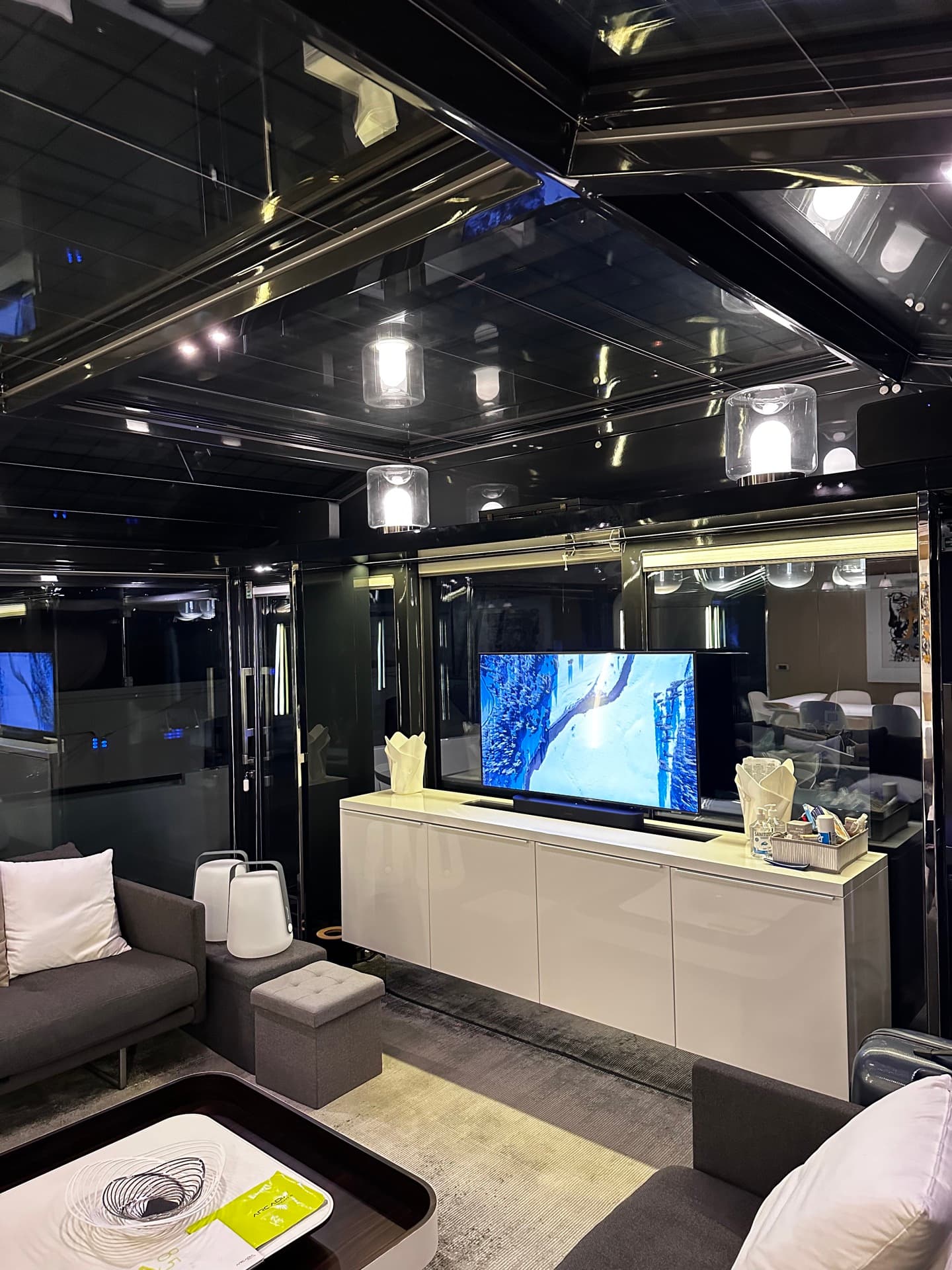
Crestron's hospitality platform makes any seminar, meeting, or conference the best it can be and streams different video sources throughout common areas, restaurants, bars, and more; we build on it so a ballroom can be divided and recombined, a boardroom starts a meeting with one touch, and a bar changes from lunch to late night on a schedule the manager owns. Lighting scenes run on Lutron or Crestron, and the sound system is zoned so each room sits at its own level.
The city sets the ceiling. New York's Noise Code caps bar and restaurant amplified sound at 42 decibels measured inside an adjacent residence and at no more than 7 decibels above ambient street noise from 10 p.m. to 7 a.m.; Monaco's residential standards run 55 to 60 decibels by day and 45 to 50 at night on weekdays; Austin's outdoor music venue permits cap sound at 85 decibels citywide; and in the UK the Live Music Act 2012 lets licensed premises host live amplified music until 11 p.m. for audiences up to 500 without a separate entertainment licence. The design respects the limit before the first complaint.
01 · Ballroom
Divisible, Schedulable, Simple
Partitions tracked by the control system, video walls and projection, wireless microphones and DSP, lighting scenes per event, and a scheduling panel at the door, all on Crestron, all run by the banquet team.
02 · F&B
Zones That Follow the Day
Restaurant, bar, terrace, and rooftop as separate audio zones with volume limits, lighting scenes that move with the hours, and a tablet the manager uses without calling anyone.
03 · Noise
Designed to the Limit
The city's decibel limits and hours are design inputs: speaker placement, subwoofer management, and level limits set so the venue stays open and the neighbors stay quiet.
At a Glance
Public-space AV in brief.
- Crestron
- Crestron's hospitality solutions make any seminar, meeting, or conference the best it can be and stream different video sources throughout common areas, restaurants, bars, and more.
- New York
- New York City's Noise Code caps bar and restaurant amplified sound at 42 decibels measured inside adjacent residences and at no more than 7 decibels above ambient street noise 15 or more feet from the source between 10 p.m. and 7 a.m.
- Monaco
- Monaco enforces residential noise standards with typical weekday daytime limits of 55 to 60 decibels and night limits of 45 to 50, alongside advance-notice rules for events.
- Austin
- Austin requires an Outdoor Music Venue permit for commercial outdoor amplified sound and caps sound at 85 decibels citywide, with lower limits for restaurant-associated venues.
- United Kingdom
- Under the Live Music Act 2012, licensed premises and workplaces, including beer gardens and hotel terraces, can host live amplified music until 11 p.m. for audiences up to 500 without a separate entertainment licence.
Sources: Crestron, hospitality solutions; Echo Barrier, NYC noise codes; Monaco Pratique, noise regulations; City of Austin, outdoor music venue permits; Lacey's Solicitors, the Live Music Act.
Reading on Ballroom and Event AV
Guides and related work.
- Ballroom AV on Crestron Flex →
Divisible rooms, scheduling, and one-touch meetings.
- Hotel meeting-room AV standards →
- Renovating AV in an occupied hotel →
- Restaurant scene control in New York →
- Commercial →
Questions About Ballroom and Event AV
Ballroom and Event AV, Answered
Can the banquet team run the ballroom without a technician?+–
That is the design goal. Partitions are tracked by the control system, each configuration has its own presets for video, sound, and lighting, wireless microphones and the DSP are set up per event type, and a scheduling panel at the door shows what is booked. A technician is for the gala, not for Tuesday's board meeting.
How do you keep a rooftop bar inside the noise code?+–
By designing to the limit: speakers placed and aimed for the terrace rather than the street, subwoofers managed, zone levels capped in the control system, and the schedule set to the hours the city allows. New York, Monaco, Austin, and the UK each set different numbers, and the design starts from them.
Can the restaurant and bar be on the same system as the guest rooms?+–
Yes, and they usually are. The public spaces, the guest rooms, and the back of house share one Crestron platform and one network, so the lighting designer's scenes, the audio zones, and the schedules live in one place and the staff learn one interface.
Can you do this in an open hotel?+–
Yes. Rollouts are phased by floor or wing, guest-room work is done in short housekeeping windows, public spaces are converted overnight, and the old and new systems run side by side until the last floor is cut over. Most properties never close a room.
Who supports the property after opening?+–
We do, remotely first. Cave Watch monitors the network, the guest-room systems, the public-space AV, and the lighting, fixes most faults without a visit, and schedules one when it is needed; Crestron XiO Cloud, the Lutron dashboard, and UniFi give the technician and the property the same view. Firmware and programming updates are staged floor by floor, and the support agreement names response times and what the on-site staff handle.
More From Hospitality
More on hotel technology.
Start Here
Walk the Property With Us.
Bring the drawings if the hotel is on paper, the room mock-up if it is in design, or the list of what no longer works if it is open. We will tell you what we would do, in what order, what it would take, and how the rooms get commissioned without closing the floor.
Start a Projector call · +1 (888) 712-2283 · [email protected]